 GIWATERMINAL
Token safety: check GIWA tokens before you buy
Every token gets an automatic check from the chain and the explorer. The badge next to its name shows the result — Clean, Caution, Risk or Backdoor — and opens the details.
What the audit checks
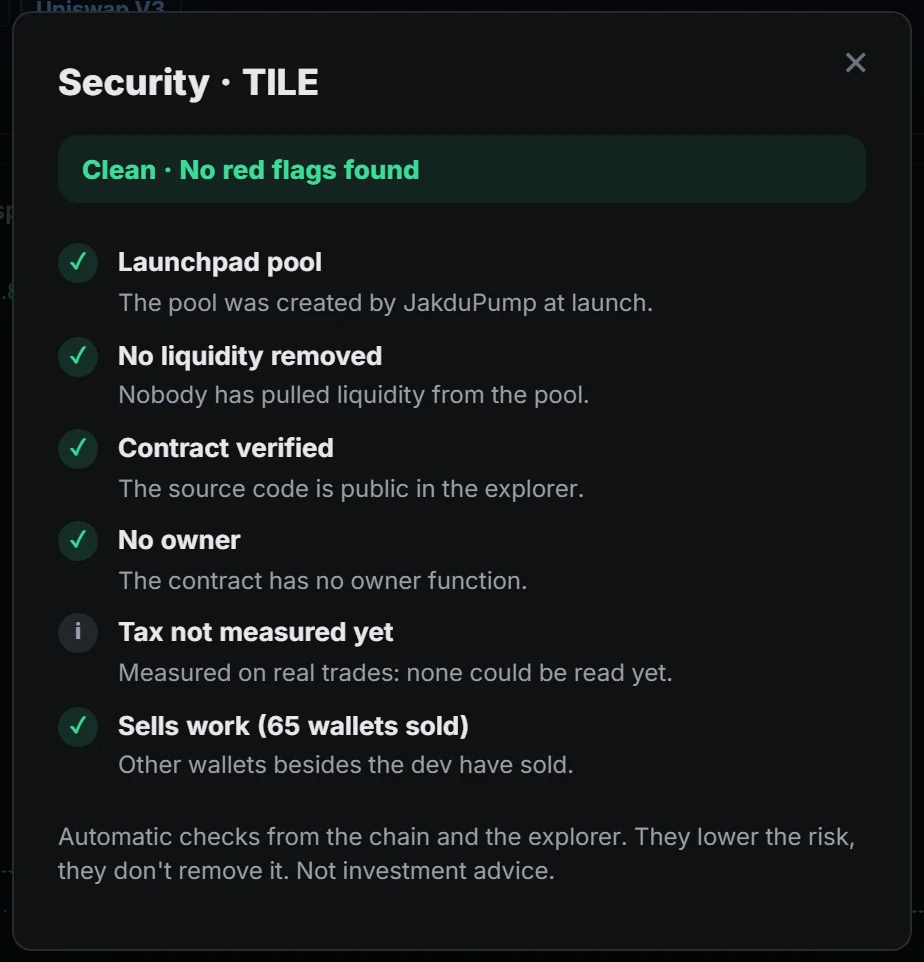
| From a launchpad | The token uses its launchpad's standard contract, not its own code. |
| Dev can't take your tokens | We simulate the creator (and the contract owner) moving a real holder's tokens without permission. Scam tokens use this trick to take or burn buyers' tokens right after they buy; if it works, the badge shows Backdoor. |
| Contract verified | The source code is public in the explorer. |
| Not a honeypot | Wallets other than the dev have been able to sell. |
| Ownership renounced | Nobody controls the contract. |
| No blacklist / mint / pause | None of the common risky functions (mint, blacklist, pause…) were found in the code. |
| Not upgradeable | No standard (EIP-1967) proxy was detected. |
| Liquidity | Locked in the curve, LP burned, or created by the launchpad. |
| Tax | Buy and sell tax, measured on recent trades. |
| Concentration | How much the top 10 holders and the dev hold. |
Holder tags
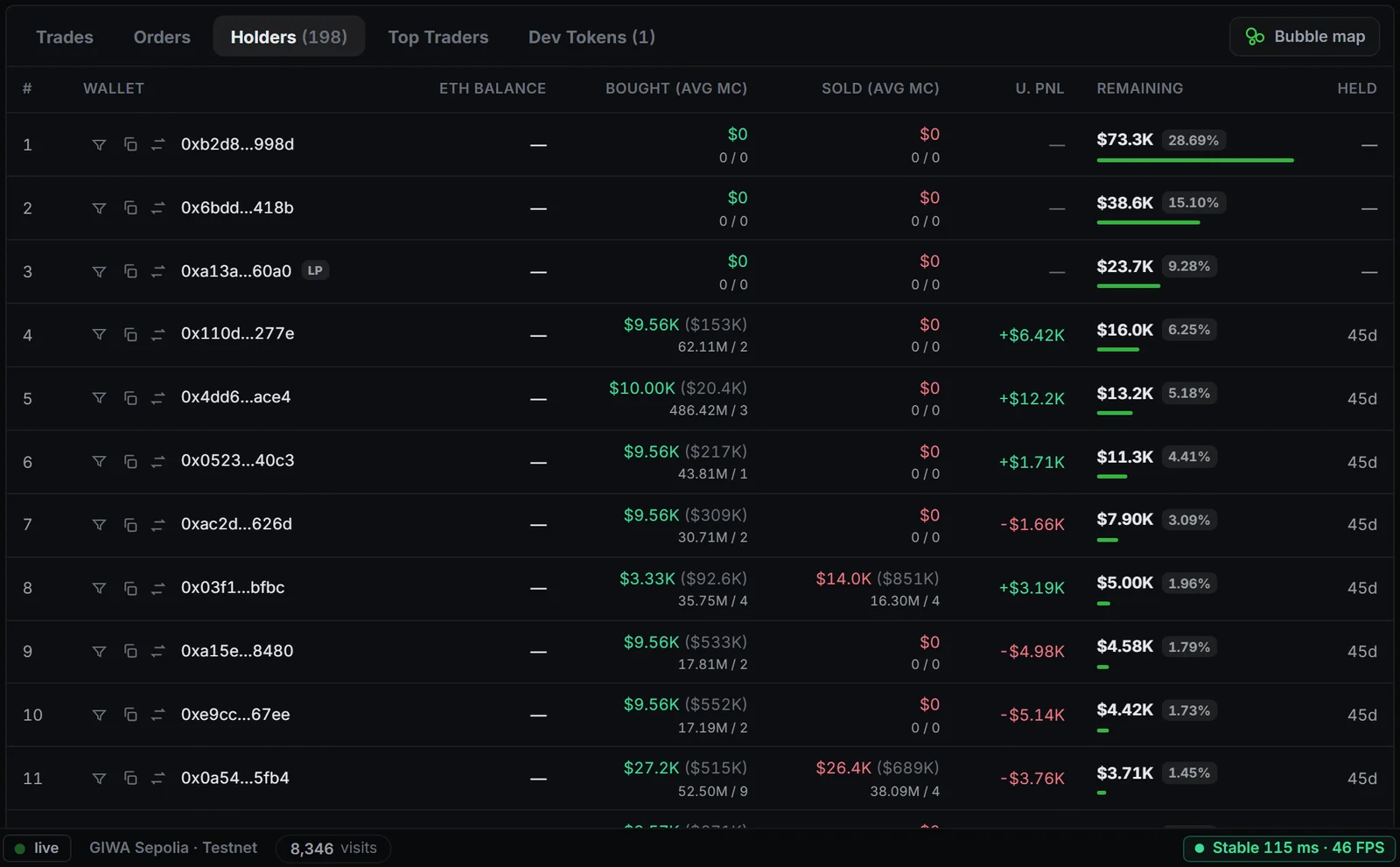
- DEV — the wallet that created the token.
- SNIPER — bought in the first 3 blocks.
- BUNDLE — bought in the same block the token was created.
- FRESH (leaf icon) — a new wallet: its first transaction was less than 24 hours ago.
- INSIDER — funded by the dev, or by whoever funded the dev (shown in the bubble map).
Bubble map
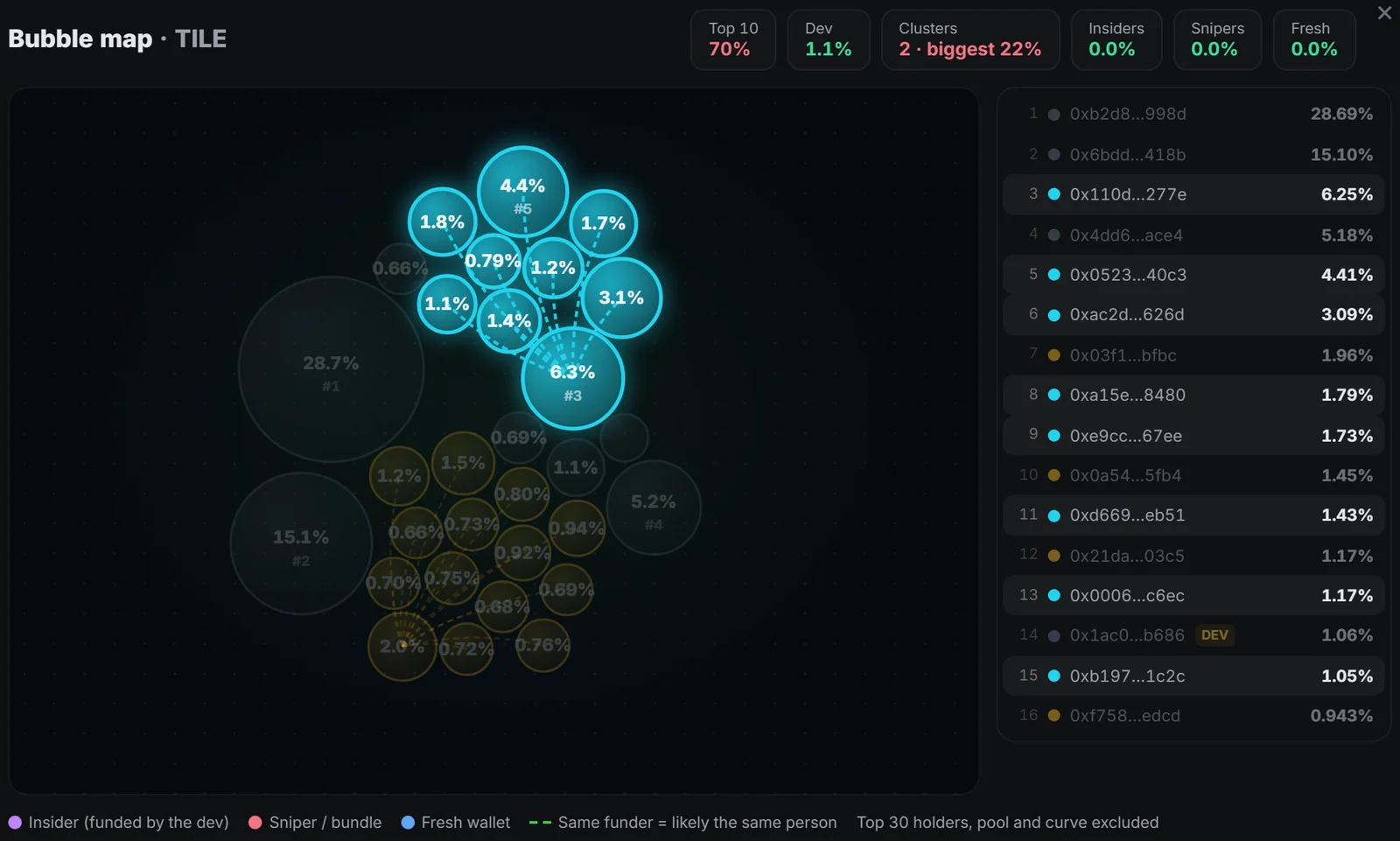
In the Holders tab, Bubble map draws the top holders by size. Wallets funded by the same wallet are linked and share a color: they're likely the same person.
Early buyers
At the end of the token's Audit section, View early buyers lists the first 30 wallets that bought: how much each one bought (and at what average market cap), sold and made, and whether it is still holding, sold part or sold all.
In the token header
Next to the safety badge, the header shows the dev and top-10 share, snipers and bundles, how many tokens the dev has launched (a long list is a red flag), whether the dev sold, and where the token trades: its bonding curve or its pool (Uniswap V2, V3 or V4, or the launchpad's own pool).